Juntos Seguros ICE: What People Mean, How It Works, and How to Use It Safely
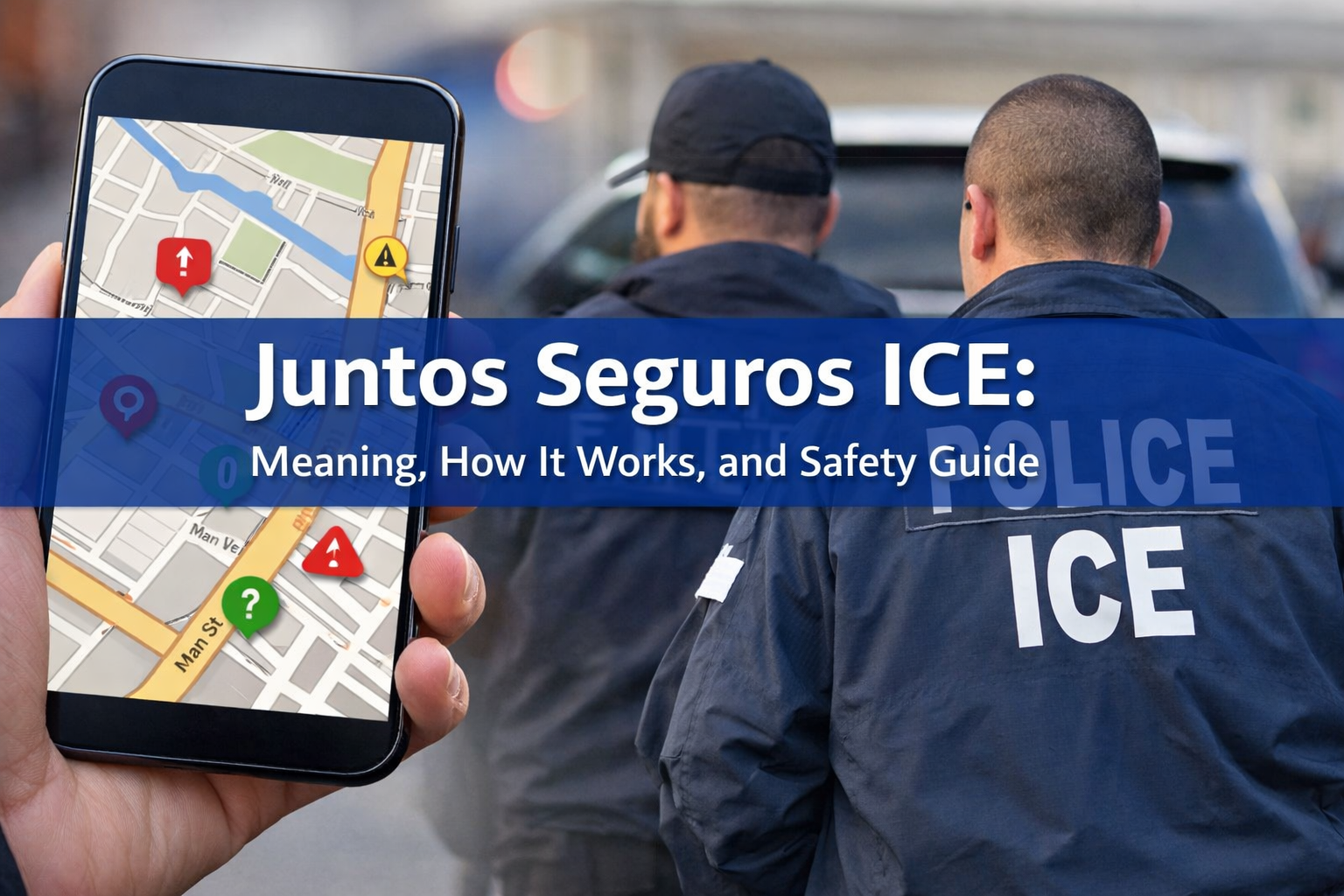
People use this search to find a community safety map or alert page. It shares public reports about immigration enforcement activity. It is not an official government service. The name also gets mixed up with insurance brands. This guide clears the confusion. It also explains limits, privacy, and safe use.
What Is “Juntos Seguros ICE”?
Online, the phrase often points to a crowdsourced map or alert tool. People check it when they feel unsure. They want calm, clear facts. They want to know what the tool shows.
This topic often involves ICE. ICE is a U.S. federal agency. ICE says its mission includes criminal investigations and enforcing immigration laws.
Most searchers expect simple answers. They expect a plain definition. They also expect guidance on safety and privacy. Many readers want Spanish friendly information too.
Is this an official government website or service?
No. Community maps are not official ICE or DHS services. Official federal information comes from .gov sites. ICE publishes its mission on its own domain.
If a site claims it is official, check the domain. Look for clear contact details. Read the about page.
Juntos Seguros ICE vs Insurance Companies: Clearing the Confusion
The words “juntos” and “seguros” sound like insurance marketing. They can also sound like a safety slogan. That overlap causes confusion in search results. Some users click the wrong page.
Use a simple test.
Insurance pages talk about policies, coverage, premiums, or claims. Safety map pages talk about reports, alerts, or a map. This difference matters for readers. It saves time and lowers stress.
It also matters for ranking. Clear disambiguation keeps users on the page. That helps engagement signals.
Why does the name cause confusion?
Because the phrase fits two topics. It fits insurance. It also fits community safety. Search engines show both. A strong explanation fixes the problem fast.
How Juntos Seguros Style ICE Safety Maps Work at a High Level
Most tools in this space rely on community reports. A user submits a report. The platform posts it on a map. The map shows a general area. Many tools add a timestamp.
Crowdsourced data can help with coverage. It can also include mistakes. That is a known feature of user submitted systems.
Reports can change or disappear for normal reasons. A report may expire after time passes. Moderators may remove duplicates. A report may lack enough detail. Newer reports may replace older ones.
These maps can help with awareness. They do not confirm facts. They also do not predict events.
Are these maps truly real time?
Sometimes, but not always. Posting can be fast. Review can take longer. Some platforms do not review reports. Even reviewed reports can be wrong.
What These Community Alerts Usually Show
Most alerts stay broad. They often show a general area. They may show a major street or intersection. They may show a time window.
Some tools label the type of report. Labels can include “sighting” or “checkpoint.” Terms vary across sites. Time context matters most.
A report can become outdated quickly. Users should check the timestamp first. They should also look for updates.
Some readers expect exact details. Many tools avoid exact details on purpose. That reduces privacy risk. It can also reduce precision. Both points are true.
What should I look at first on an alert page?
Check the date and time. Then check the location detail level. Then read the description for clarity. Ignore posts that lack time context.
What Responsible Platforms Do Not Encourage Sharing
Responsible platforms avoid personal identification. This protects bystanders. It also reduces harm from false claims.
Do not post faces. Do not post license plates. Do not post private addresses. Do not post names. Do not post personal documents. Do not post rumors as facts.
Keep reports general. Stick to what you saw. Avoid guessing motives or identity.
If you share a post, remove identifying details. Share only what serves safety. Do not share what feeds panic.
Can sharing details harm innocent people?
Yes. It can expose bystanders. It can spread fear. It can create false blame. Privacy first reduces these risks.
How Accurate Is the Information?
Accuracy varies by platform and by report. Crowdsourced reports can be useful. They can also be imperfect. They can be outdated. They can be posted in bad faith.
This is not a unique problem. It is common in user submitted reporting. It is why policies and moderation matter.
Your readers need honest expectations. A map shows what someone reported. It does not prove what happened.
Common reasons reports are unreliable
Some reports miss the time. Some reports use vague locations. Some reports repeat social media posts. Some reports mix facts with emotion. Some reports confuse agencies.
Readers should slow down before sharing. They should look for clear time and place. They should avoid spreading unclear claims.
Why verification can vary
Verification means different things. One site may check duplicates. Another may require certain fields. Another may use volunteers to review posts. Another may compare with public information.
Verification is not the same as certainty. It is a filter, not proof.
Does “verified” mean the report is true?
Not always. It often means the platform applied its own checks. It does not mean the government confirmed it. Readers should still use caution.
Understanding the Limits of Community Reported Data
This section protects readers and builds trust.
These maps are not official government data. ICE publishes official information on its own site.
These maps are not legal advice. They cannot tell a person what to do. Legal advice depends on case facts and local rules.
These maps are not guarantees. They cannot promise full coverage. They cannot promise accuracy. They cannot promise timing.
Clear limits help readers make better choices. They also make your content safer to cite.
Why should users double check reports?
Because reports can be wrong or old. A quick check can prevent panic. It can also reduce the spread of false claims.
Privacy and Anonymity: What Users Should Know
Privacy is a top concern for this audience. Many people fear tracking. Many fear exposure. Many fear data misuse.
Some platforms claim anonymous reporting. Do not treat that as a fact. Privacy rules differ by site. The safest step is reading the privacy policy.
A site may collect basic analytics. It may collect IP or device data. It may store reports for moderation. Policies should explain these points.
You can also share practical safety habits.
Use strong passwords. Avoid posting personal details. Avoid photos with faces. Avoid photos showing private addresses. Keep your sharing limited and careful.
Privacy also includes what you repost. Even true details can harm people. Share only what supports safety.
Do people in the U.S. have rights during immigration enforcement encounters?
Yes. The ACLU states that people have constitutional rights regardless of immigration status.
The National Immigrant Justice Center explains key points for ICE encounters. It includes guidance about warrants and consent at home.
This article is informational only. It does not give legal advice.
Using Community Safety Information Responsibly
Responsible use keeps communities safer. It also improves the quality of shared information.
Use these tools for awareness. Do not use them for confrontation. Do not interfere with law enforcement. Do not harass anyone.
Avoid fear language. Avoid rumors. Avoid sharing posts that lack time context. Be clear about what you know.
If you share a report, add the timestamp. Describe it as unconfirmed if needed. Encourage calm, not panic.
Responsible behavior protects vulnerable people. It also protects your readers.
Should I repost a report on social media?
Repost only if it is clear and recent. Keep details general. Remove identifying information. If you are unsure, do not repost.
What to Do If a Juntos Seguros ICE Map Is Unavailable
Sites go offline for many reasons. Servers fail. Domains change. Pages get removed. Sometimes platforms pause.
When a map is unavailable, rely on stable sources.
Start with trusted rights guides. Keep contact details for legal help. Use local community support networks when possible.
For workplace situations, NILC has an employer guide. It explains rights and limits during immigration visits.
For warrant basics, some ACLU affiliates explain the difference between warrants. They also explain what a judicial warrant looks like.
For general encounter guidance, NIJC explains key points. It includes guidance about ICE forms and entry without consent.
What is a safe backup plan if sites go down?
Build a rights plan, not a link list. Learn basics from trusted groups. Keep a legal contact number. Do not rely on one map.
General Legal Awareness and Rights Information
Knowing basic rights reduces panic. It also helps people make safer choices. Many guides stress calm behavior. Many stress the right to remain silent.
The ILRC “Know Your Rights” flyer lists basic steps. It includes remaining calm and asking for a judicial warrant at home.
NIJC explains that ICE “warrants” may be ICE forms. It notes they are not signed by judges. It also explains consent at the door.
NILC also explains warrant types in a separate document. It discusses administrative warrants and judicial warrants.
If someone needs personal advice, they should seek qualified legal help. A blog cannot replace that.
Final Thoughts
People search this topic when they feel uncertain. Clear writing helps them think. Calm writing helps them choose safer steps.
Use community reports as one signal. Use trusted rights guides for basics. Use qualified legal help for personal cases. Protect privacy in every step.
If your page stays clear and careful, readers will trust it. Trust leads to stronger engagement. Engagement supports higher rankings.